Hôtel de Notre-Dame
Poor ThingsHôtel de Notre-Dame is a compact Paris hotel whose rooms serve a distinctly commercial purpose: under Millie Cronquebil’s management, customers pay to marry strangers for an hour or less. Bella Baxter encounters it while seeking rest for Duncan Wedderburn, but the hotel soon becomes more than a place to lodge. Its cramped foyer, hourly charges, and briskly worldly manager bring together shelter, sex work, and the economic vulnerability of deserted women.
Setting and First Arrival
Bella first notices the Hôtel de Notre-Dame while Wedderburn is incapacitated at a nearby café, drinking absinthe. She goes inside to find an inexpensive room for him, explaining to the woman at the desk that he needs rest and that they have little money and almost no baggage. The hotel offers a cubicle, though its price is calculated by the hour rather than by the night: twenty francs for the first hour, paid in advance, and another twenty francs for every additional hour or fraction, to be paid before either guest leaves.
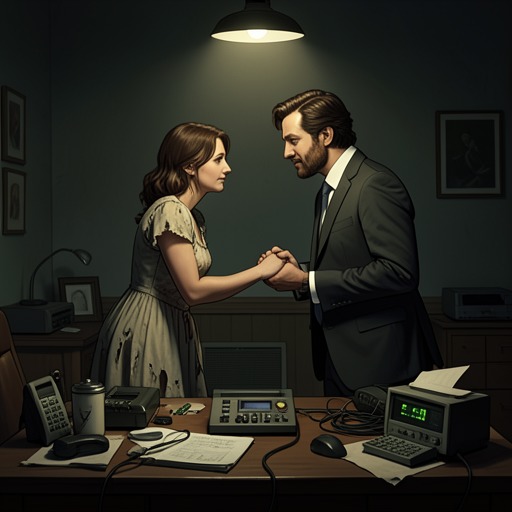
The foyer makes an immediate impression of narrowness and constrained movement. A heavy mahogany desk stands in the middle, almost dividing the small space in two; anyone entering or leaving has to squeeze around its sides. Behind it sits the neatly dressed manager, whose black silk gown and alert manner give Bella an image of a younger, friendlier Queen Victoria. The scene sets the hotel’s order against Wedderburn’s disorder outside: its transactions have prices, rules, and a manager prepared to explain them, while Bella is trying to make sense of a companion who cannot reliably explain himself.
Millie Cronquebil and the Hotel’s History
The manager introduces herself as Millie Cronquebil, though she was born Millicent Moon of Seven Dials and asks Bella to call her Millie. She had come to Paris after London’s hotel regulations made it difficult for newcomers to enter the trade. At the Hôtel de Notre-Dame, she first held a subordinate position, then became indispensable to its manager, who married her. After the Franco-Prussian war, the Communards suspended her husband from a lamp bracket because of his international sympathies; Millie took over the hotel’s management after his death.
Her account presents business as both an occupation and a practiced competence. Millie says she has pursued the trade with facility and acumen, and contrasts her experience managing French men with her view of British men as eccentrics who pretend to be practical and honest. When Bella asks what matters most, Millie names money and love. The answer is not an abstract maxim detached from the hotel: it comes from a woman who has built a livelihood within rules that differ sharply across national borders, and who treats desire and payment as realities to be managed rather than politely ignored.
A Licensed Trade and Women’s Livelihoods
Millie explains that the hotel is what Londoners call a knocking-shop. Its customers pay to wed a total stranger for periods of an hour or less. Such arrangements are illegal in Britain, she says, whereas in France a woman may obtain a licence or work in a licensed establishment such as hers. The Hôtel de Notre-Dame therefore occupies a specific legal and economic position: what British law prohibits can, under the French system Millie describes, be organized as a business with an identifiable manager and a set fee.
Millie also reframes Bella’s journey with Wedderburn. After hearing how the pair met and why Bella is travelling in Paris with so little luggage, she praises her for taking a long honeymoon with a lover before marrying a respectable husband. In her view, experience before marriage can make a woman better prepared for the give and take of married life. She describes Wedderburn as used up and says that Bella may benefit from variety; she also suggests that he may have found another woman while Bella was away. Millie calls Bella his mistress, distinguishing that position from the Parisian term she gives for a particular kind of mistress, a midinette.
Her account of the hotel’s customers further complicates any neat division between respectable marriage and paid intimacy. Many of the men who come to the Hôtel de Notre-Dame are already married, Millie says, and some also have mistresses. She tells Bella that deserted women can earn enough working for her to return to God. The hotel thus appears in Millie’s explanation both as a commercial establishment serving male customers and as a possible source of income for women who have been left without dependable support.
Bella’s Stay and the Hotel’s Narrative Role
Bella’s stay brings her into conversation with Millie rather than simply providing a room for Wedderburn. While he remains at the café, Bella returns to tell him that they have been offered a place; he responds blearily and drinks another absinthe. Back inside, Millie makes more coffee and asks about the couple. Hospitality here is inseparable from inquiry: Millie listens, interprets the relationship, and offers her own practical account of what Bella might do next.
The hotel’s later appearance in Bella’s letter is less controlled. Usually rising late, she is summoned by Millie shortly after eight in the morning and told to hurry downstairs to the Salon International, where a doctor is looking at the girls. Bella leaves the Hôtel de Notre-Dame suddenly after two hours of terrible confusion, which she attributes to her own ignorance. The evidence does not explain the doctor’s examination further, but the episode marks a change in the hotel’s function within her account: it is no longer only the refuge and workplace Millie has described, but the setting for an encounter Bella cannot readily understand.
Across these scenes, the Hôtel de Notre-Dame is defined less by permanence than by exchange: rooms are rented by the hour, marriages are temporary, and Millie assesses love alongside money. Its narrow foyer and exacting payment terms give material form to that system, while Bella’s dependence on Millie’s explanation shows how unfamiliar its rules are to her. The hotel offers shelter without removing vulnerability; it makes a livelihood possible within the very conditions that leave women exposed to abandonment and unequal power.